The Blood of Love
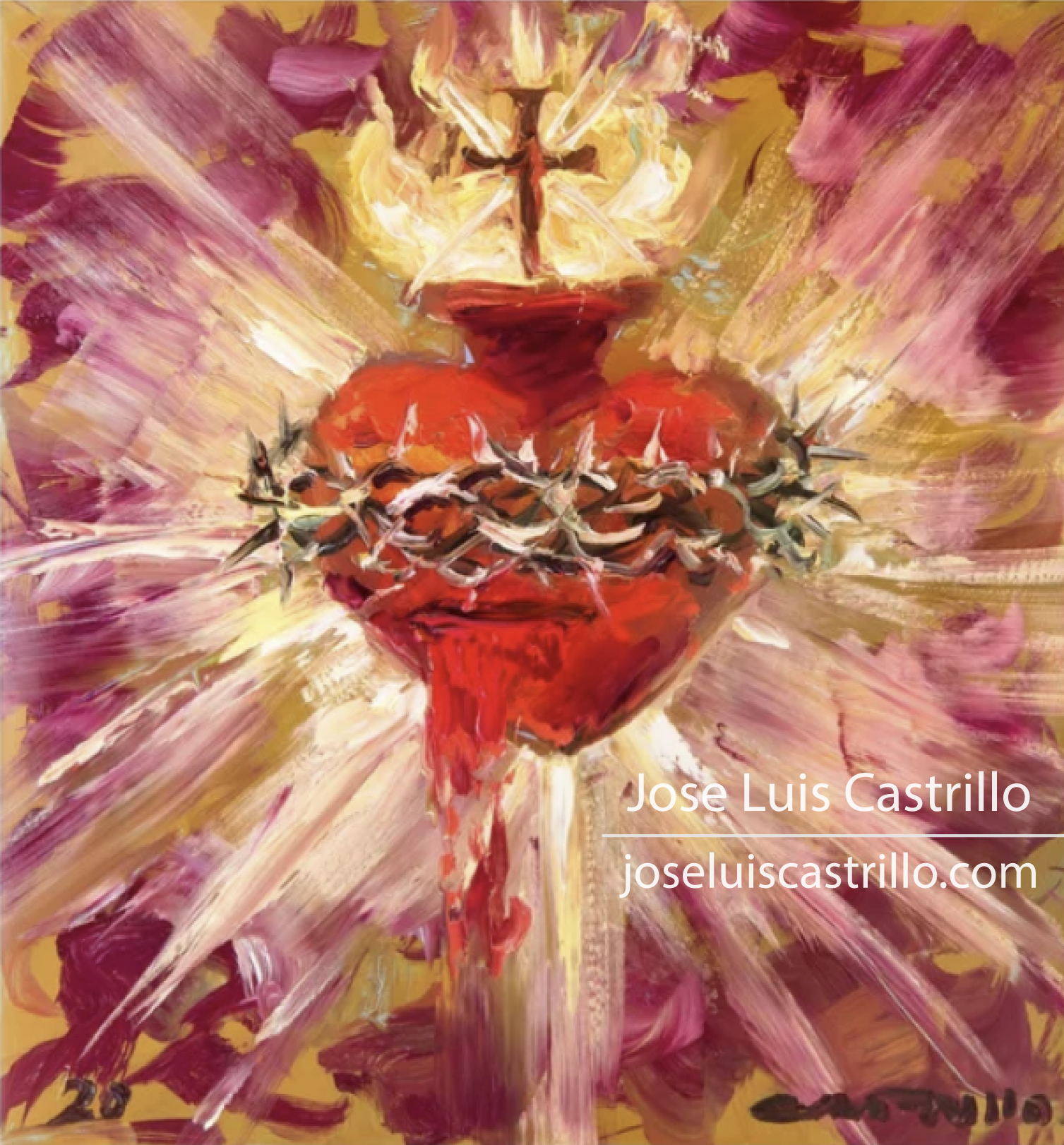
Christ’s Heart is often depicted as pierced and bleeding, re-presenting the lanced side of Christ crucified (Jn19:34), invoking the rich imagery of a love which bleeds. In this installment of our Sacred Heart series, we’ll consider how the blood dripping from the heart of Jesus educates us about the nature of love.* For this, it is critical that we begin with understanding ancient symbolism around the meaning of blood.
*As a brief aside on the word “educate”… today it often connotes “putting something into” the student… but it can also be used to mean “drawing something out of” the student. There are two Latin roots which inform the word: educere, meaning “to draw out,” and educare, meaning “to nourish” or “to bring up.”
Life, Purity, and Freedom
For people at the time and culture of Jesus, blood was the most powerful purifying agent. It represented life itself, and was used to purify and consecrate altars, temples, and priests.
Yet blood was also something that could render someone “ritually unclean.” After involuntary bleeding (eg: from a wound, menstruation, or childbirth), a person needed to (ritually) wash and/or wait before being able to enter the sacred (and ritually clean) spaces and assemblies.
Blood was thus a boundary-point between the pure and impure. How one relates with the lifeblood will affect how "clean" one is, sometimes in a ritual way (eg: Moses smearing ram's blood on Aaron's ear, thumb, and toe (Lev8:23)), sometimes in a moral way (eg: violently spilling someone else's blood). In the Hebrew religious system, the ritual spilling of animal blood was able to atone for the sin of the people, which was deeply connected to the covenant between God and Abraham (discussed shortly).
With this in mind, Jesus' Jewish followers wrote of how the perfect blood of Christ could perfectly atone for the sin, not just of the Hebrew people, but of all people. “Jesus Christ, the Righteous One… is the atoning sacrifice for our sins, and not only for ours but also for the sins of the whole world.” (1Jn2:1-2)
And this atonement is not just an external show so we can say we're “good,” but so our internal hearts can be re-oriented towards God: "For if the blood of goats and bulls and the ashes of a young cow sprinkled on those who are defiled consecrated them and provided ritual purity, how much more will the blood of Christ, who through the eternal Spirit offered himself without blemish to God, purify our consciences from dead works to worship the living God." (Heb9:13-14)
The symbol of Christ's blood then, is one of freedom and liberation! It is deliverance from all our shame and our malformed consciences, including our overly critical consciences. Christ’s blood is that which first exposes our violence, self-centeredness, abuse, and vice… then purifies us of our excuses, justifications, and own cover-ups of such things… and then washes away our guilt, so we can move forward in faith, towards at-one-ment with God — for that is the meaning of atonement.
Thus, the blood streaming from the heart of Christ purifies our own hearts, so that we are close to God, like Christ, and thus able to live truly free, for "to the pure all things are pure." (Titus1:15)
Blood of the Covenant
Now, a needed discussion on ancient covenants. "Covenant" in Hebrew ("berit" בְּרִית) means a "cut agreement." Covenants, especially the most serious ones, were often made by cutting an animal — a bloody sign of the severity of the agreement and a warning of what would happen to the one who breaks the covenant. When God's covenant with Abram was "cut," God (and not Abram) walked the blood-path between 5 severed animals, displaying God's faithful and unconditional commitment in blood.
When the Hebrews sacrificed animals (the same animals used in Abram's original cut-agreement), this served as a reminder to both them and God — reminding God of his promise to forgive — and reminding themselves of their own failings, while re-committing themselves to righteous and just living. It was never God's desire to require sacrifices as an end to themselves, but as a means to living well: “‘Of what importance to me are your many sacrifices?' says the Lord. ‘I have had my fill of burnt sacrifices… the blood of bulls, lambs, and goats I do not want… I do not listen, because your hands are covered with blood. Wash! Cleanse yourselves! Remove your sinful deeds from my sight. Stop sinning. Learn to do what is right. Promote justice. Give the oppressed reason to celebrate. Take up the cause of the orphan. Defend the rights of the widow.’” (Isaiah 1:11…15-17) The same could be said for circumcision, the quintessential sign of the Abrahamic cut-agreement, which reminds of the pure, covenantal life to which each is called.
Jesus saw, along with Isaiah and all the prophets, that the covenant between God and Abraham was continually failing to produce a people who acted justly, loved kindness, and walked humbly with God. (Mic6:8) So Jesus made a new (or re-newed) cut-agreement, with his own cut body and spilled blood, saying "this is my blood, the blood of the covenant, that is poured out for many for the forgiveness of sins." (Mat26:28) The ultimacy of this new cut-agreement is expounded upon by early Christians, who say this as a new and age-abiding covenant (Heb13:20) which made the old cut agreement obsolete (or fulfilled it). Circumcision and animal sacrifice are taken up into the person of Jesus, as the supreme covenantal sign, and supreme age-long reminder to God and humanity of God’s forgiveness and humanity’s call to love.
A New Bloodline
Receiving the life (blood) of Christ changes the identity of the one who receives. The one who receives finds this lifeblood extends forward to transform their spiritual destiny and reaches backward to transfigure their spiritual heritage.
This transfiguring includes participation in a glorified family, for "if you belong to Christ, then you are Abraham’s offspring." (Gal3:29) Jesus thus is a new patriarch — the parent of a new generation ("which shall not pass away" (Mat24:34)) — engendering a new bloodline. And this bloodline does not discriminate based on physical heritage, but is open to all of good spirit, with a family tree connected by the veins of Christ — the flowing Spirit of Love.
In drinking the eucharistic blood of Christ, Christ's life enters the Christian, and transforms their life to be more in alignment with His. By drinking of the Christ's blood, we share in the spirit of his bloodline. By eating of his flesh, we share in the unity of his body.
Christ's Heart longs for the unity of all Christians, for when they fight against each other or abuse each other, it is sister turning against brother, father against daughter. Christ's blood flows from his heart so we can live in peace, as one, in love, and hatred of one another is blasphemy against this precious blood.
“But now in Christ Jesus you who used to be far away have been brought near by the blood of Christ. For he is our peace, the one who made both groups into one and who destroyed the middle wall of partition, the hostility, when he nullified in his flesh the law of commandments in decrees. He did this to create in himself one new man out of two, thus making peace, and to reconcile them both in one body to God through the cross, by which the hostility has been killed.”
Birthing New Life
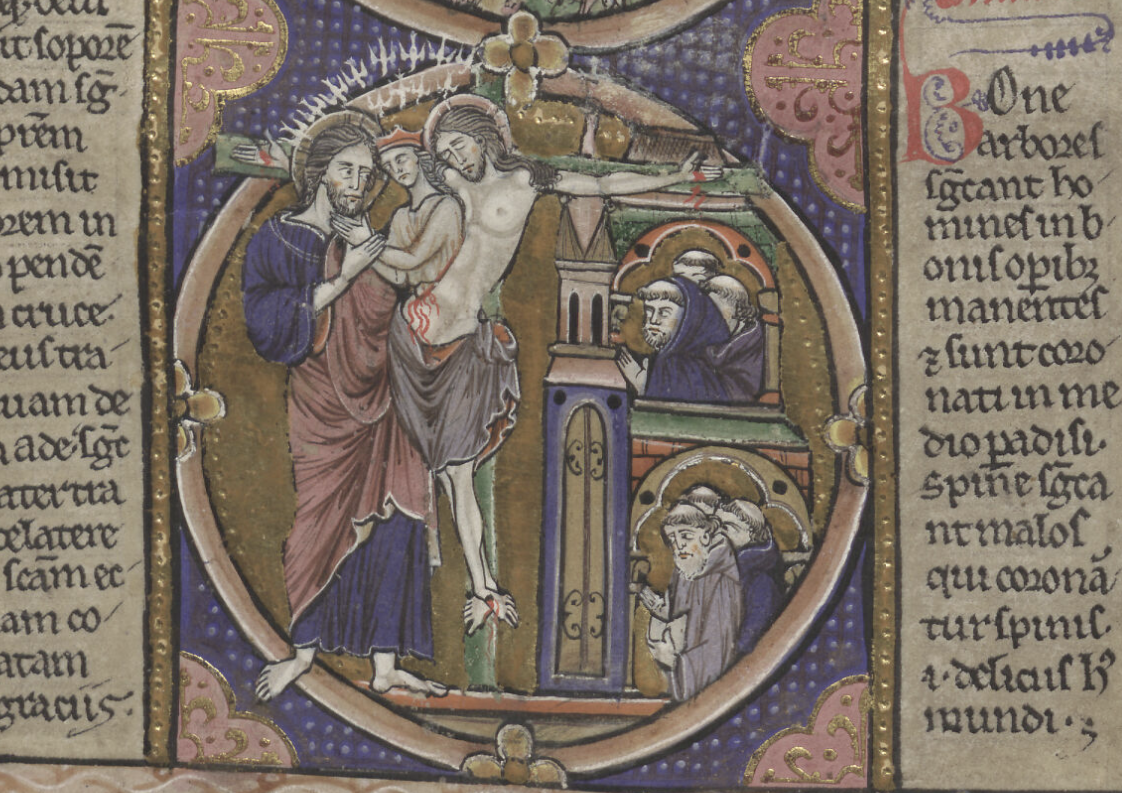
As John the Beloved recalls, after Jesus gave up his spirit, "one of the soldiers pierced his side with a spear, and at once blood and water came out." (Jn19:34) These two birthing fluids are also the liquids of the most holy sacraments — the waters of baptism and the blood the Eucharist. Church tradition teaches that it was at this very moment of Christ's side opening that the church was born (see the Body of Christ).
For humanity was born from the first Adam… after he had been put to sleep, God took from his side and fashioned for him a bride (Gen2:21), Eve, mother of the living. The new humanity is born from the new Adam (Christ Jesus)… after he had been put to sleep, God took from his side and fashioned for him a bride, the Church, mother of those with renewed life. Both Eve and Church are "azer kenegdo" (עֵזֶר כְּנֶגְדּוֹ) (Gen2:18) — companion partner and opposing support. Indeed, Jesus can turn to his church and exclaim, "This one at last is bone of my bones and flesh of my flesh." (Gen2:23)
Upon the cross, Christ turns wounds into channels of new birth. For Christ is a mother — who births new life from the wounds of this world. And Christ is a midwife — who helps each of us to turn our own wounds into life.
We live and die as children of God, yet Christ invites us further into maturity as friends and companions of God, entrusting us to live-out his Gospel in the world! And this good message is a life reflecting the love of a God who births — a God who pours out his life into creation so it may have being — a God who empties himself through Christ for the atonment (at-one-ment) of all things — a God who empties himself into our hearts so we may do the same: emptying ourselves for others - giving away our lifeblood - conforming to the self-giving nature of reality itself! And thus, magnify the weight (kavod (כָּבוֹד), glory) of God!
“The human mother can suckle the child with her milk. But our beloved Mother Jesus can feed us with himself. This is what he does when he tenderly and graciously offers us the blessed sacrament, which is the precious food of true life. In mercy and grace he sustains us with all the sweet sacraments… In other words, Christ the Mother is entwined with the wholeness of life which includes all the sacraments, all the virtues, all the graces of incarnation, all the goodness that holy church ordains for our benefit. The human mother can tenderly lay the child on her breast, but our tender Mother Jesus can lead us directly into his own tender breast through his sweet broken-open side.”
Self-Emptying Reality
All this shows us that truly, unconditional, self-emptying love (agape love), is indeed the heart of the Way. And this Way (Tao) to which Christ calls us is present throughout, and underlying all reality.
For all things that exist only exist because they were granted existence unconditionally (through no means of their own). You were brought into this world without any way to earn it, but were gifted life… from your parents, from their parents, from society which supports them, from all the circumstances that led to your birth, from this planet that supports life, and ultimately from a Reality which is inherently life-affording.
All these things give themselves (empty themselves) such that you can exist. Even right now, you are made up of atoms, giving themselves into molecules, which give themselves into cells, which empty themselves into organs, which self-empty into your body… You were, and are, literally loved into existence.
Furthermore, for you to grow into your full personhood, you require the unconditional (unearned) care of others. As a child — by sacrificing for you, and giving themselves to you — your parents (or caretakers) loved you into a greater personhood. And friends and society and culture and ecosystems and nature all play roles in this as well — they all give themselves to you, in some way.
And for you to continue to be like the Reality that created you, you must give yourself away in the same way. For Love is the Grammar of Reality — the Logos which holds the cosmos together. For you to mature out of receiving love (eros) and into giving love (agape) (and ultimately mutual, cooperative love (philia)), you must learn how to, like the heart of Christ, give yourself away — emptying your life for the sake of the world.
“You keep what you have by giving it away”
This is the aim of true humility — to give oneself away, to self-empty, to bleed for others — not for the sake of being less, but for the sake of giving more, and thus becoming more than we could ever imagine.
“For it is in giving that we receive,
It is in pardoning that we are pardoned,
And it is in dying that we are born to eternal life.”
This is post 5 of a 7 part series. The next post is on the Light of Love.
Image Credits:
Artwork by Jose Luis Castrillo (browse his website here) (Instagram).
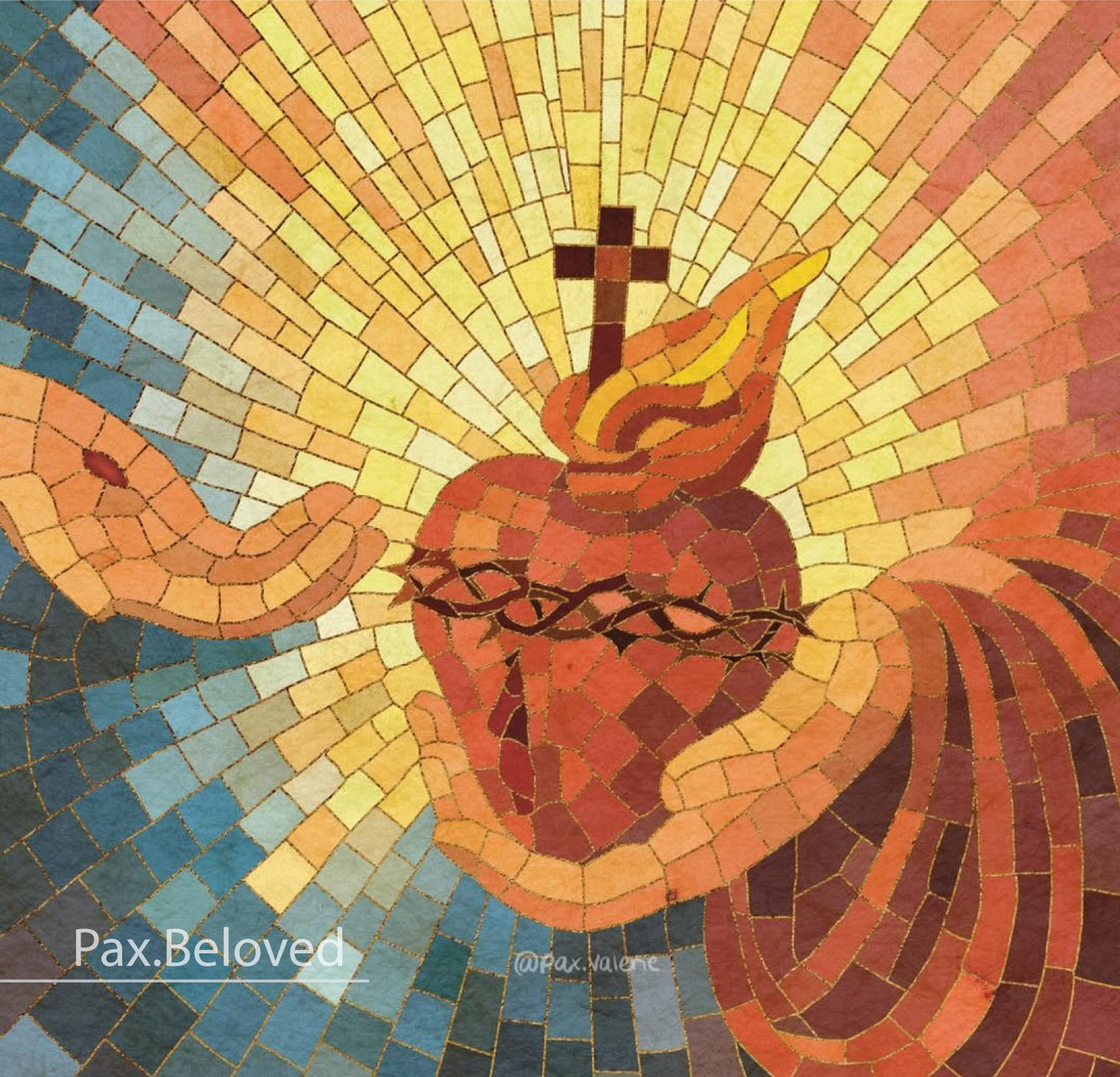
Art from illustrator Valarie Delgado of Pax.Beloved (Etsy store) (Instagram).
The birth of the church, illustrated in the Illuminated Bible Moralisée Codex 1179, scan 15. Can be found in the National Library of Austria (digital copy here).
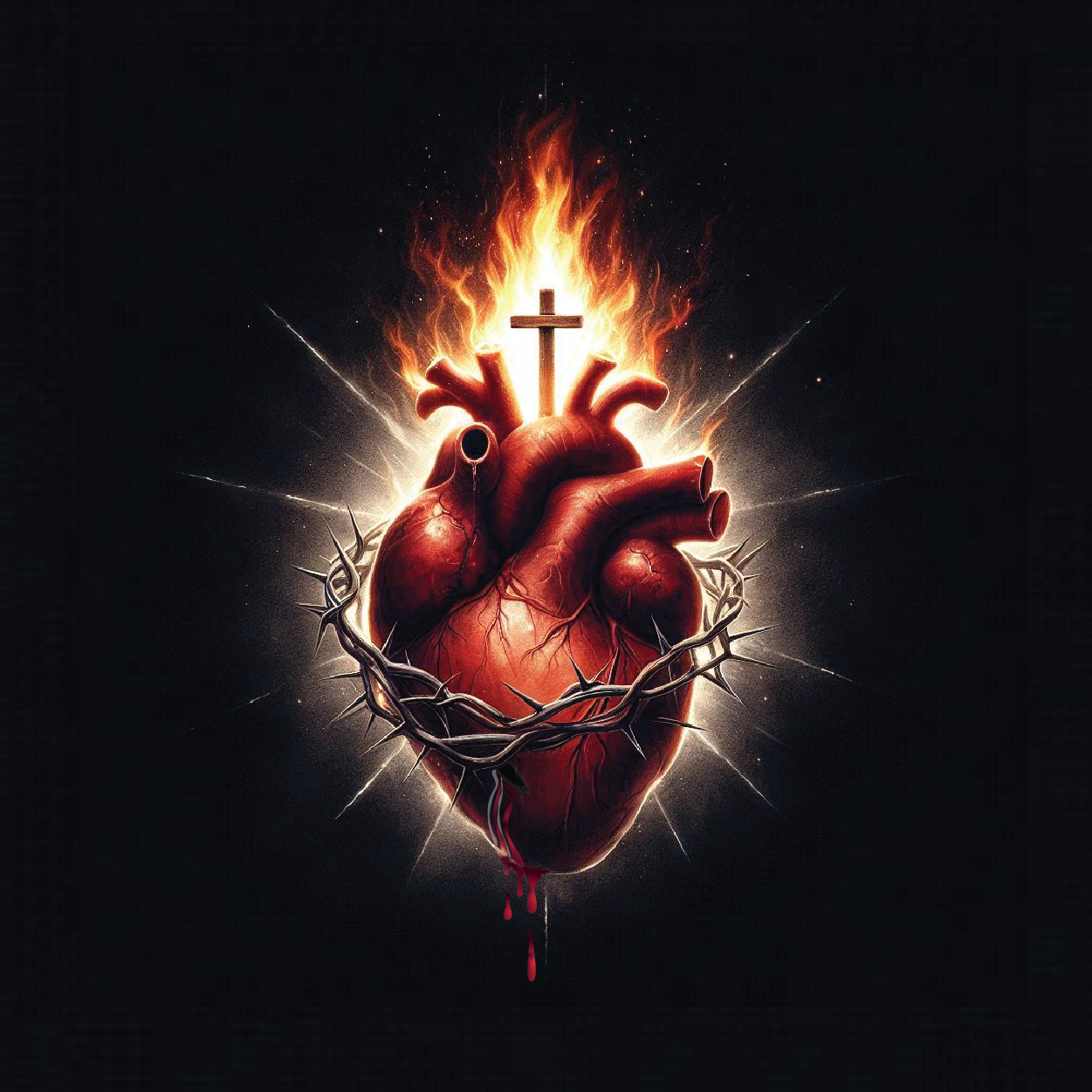
Image edited by myself in Illustrator and generated with Microsoft Designer AI in 2023.